Tight Access Excavation: How To Work In Small Spaces
Excavation projects rarely take place on perfectly open sites. Narrow side paths, fenced boundaries and existing structures often limit access, particularly in established residential areas. What might seem like a straightforward digging job can quickly become complex when machinery needs to navigate confined spaces.
Tight access excavation on the Central Coast requires more than simply downsizing equipment. It involves careful planning, thoughtful staging and attention to surrounding structures. Builders, landscapers and property owners who understand these factors are better positioned to complete projects efficiently while minimising disruption.
This guide explores practical approaches to working in small spaces and how specialised excavation teams adapt to restricted conditions.
Tight access sites demand careful planning before machinery arrives.
Before excavation begins, the site needs a clear plan. Measuring access points, identifying obstacles and checking ground conditions helps determine what machinery can be used and how it will move through the space.
On restricted sites, planning often covers gate width, overhead clearance and turning space. It also includes deciding where spoil will be staged and how it will be removed without blocking access for other trades.
A detailed site assessment reduces the likelihood of delays once work starts. When the approach is mapped out early, tight access excavation can run more smoothly even when space is limited.
Compact machinery makes excavation possible where larger equipment cannot fit.
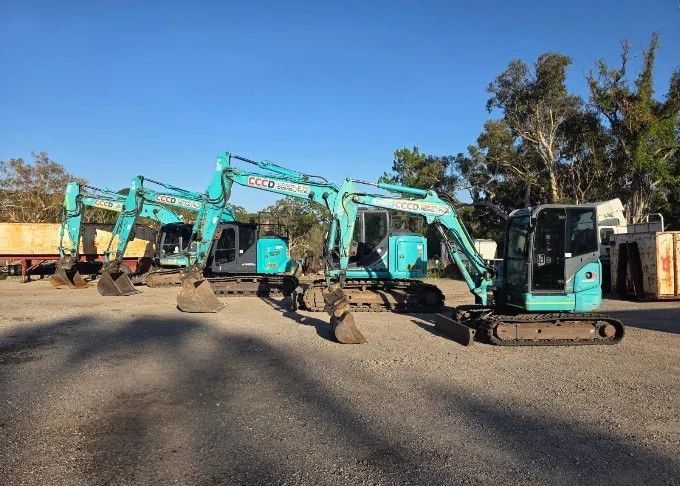
Specialised compact machinery makes a major difference on tight sites. Mini excavators and smaller earthmoving equipment are designed to operate within narrow footprints while still handling common excavation tasks.
These machines can offer:
- narrow track widths to pass through side access points
- reduced tail swing to work closer to boundaries
- attachments suited to trenching, levelling and clean-up
- lower ground pressure that may reduce surface impact
Choosing the right machine for the job is part of what makes tight access excavation practical. It allows work to progress without unnecessary property changes or avoidable disruption.
Access pathways must be protected to avoid property damage.
When equipment needs to travel across driveways, paving or lawn areas, protection is a key part of the plan. Without it, surfaces can crack, rut or stain, especially where repeated movements occur.
Ground protection can include temporary mats, plywood sheeting or defined travel paths that keep machinery away from fragile edges. Operators also consider where they can turn safely, since tight pivots can scuff pavers or tear turf.
Protecting access routes is not just about presentation. It also helps keep the worksite safer and reduces time spent dealing with preventable damage after the job.
Underground services require extra caution in confined spaces.
Small sites often have services running close to where excavation needs to happen. Water pipes, electrical cabling, gas lines and drainage can be difficult to reroute, so planning around them is essential.
Common safety steps include:
- confirming service locations before digging
- using detection methods where appropriate
- digging in stages when approaching known services
- keeping a clear buffer around vulnerable lines
In confined spaces, there’s less room to adjust if something unexpected appears. Careful preparation and controlled digging reduce the risk of damage and the delays that can follow.
Limited working space calls for precise excavation techniques.
Tight access work often relies on smaller, more controlled cuts rather than large bulk excavation. Operators may dig in shorter sections, clean edges as they go and use staged removal to keep the site stable.
Precision matters when working near footings, retaining walls, fences and established landscaping. There’s usually limited space for repositioning machinery, so every movement needs to be deliberate.
This is where method matters as much as machinery. A measured approach helps achieve the required levels and gradients while keeping the surrounding area intact.
Material removal can be the biggest challenge on small sites.
Excavation produces spoil, but removal is often the hardest part in tight areas. If a truck cannot get close to the dig, the plan needs to account for how material will be shifted out efficiently.
Practical options include:
- using smaller tipper loads more frequently
- staging material temporarily for later removal
- coordinating skip bin placement with access needs
- timing removals around other trades on site
Material handling can influence how quickly the excavation stage completes. Planning removal early helps avoid cluttered sites and stop-start progress.
Communication between operators and site managers keeps projects moving.
Tight access excavation usually runs alongside other work such as concreting, drainage, landscaping or building upgrades. Clear communication helps everyone understand access requirements and timing so the site doesn’t become congested.
Site managers and operators often confirm delivery points, working hours and safety buffers before machinery arrives. During the job, short check-ins help coordinate spoil removal, service identification and any scope changes.
Good communication keeps the project predictable. It also reduces the risk of rework caused by mismatched expectations about levels, boundaries or staging.
Professional tight access excavation reduces risk and disruption.
Restricted sites bring more variables, which is why planning and capability matter. A well-run tight access job combines suitable equipment with a careful method and clear safety processes.
Key elements often include:
- pre-start site assessment and access planning
- compact machinery matched to the job
- staged digging for control and accuracy
- spoil removal planned around limited access
When these pieces come together, tight access excavation can be completed with less disruption to the property and surrounding structures.
Tight access excavation on the Central Coast is common on established blocks with narrow side access, fences and existing landscaping. Here at Central Coast Complete Demolition, we handle excavation and earthmoving for sites where space is restricted, including planning, digging and spoil removal. Visit our website to learn more or contact us to discuss your project and request a quote.