Excavation On The Central Coast: From Land Clearing To A Build-ready Site
A block of land rarely arrives ready to build on. Whether it's covered in scrub and native vegetation, sitting on uneven ground, or carrying old stumps and root systems from previous clearing, the path from raw land to a build-ready site involves a series of carefully sequenced steps.
Excavation is the backbone of that process — but it doesn't happen in isolation. Before any machine cuts into the earth, the site needs to be cleared, assessed and prepared. Understanding how these stages connect, and what's involved in each one, helps property owners, builders and developers plan more accurately and avoid costly surprises. Excavation in Central Coast projects follow a consistent sequence, and knowing that sequence gives you a clearer picture of what to expect before work begins.
What Is Land Clearing?
Land clearing is the process of removing vegetation, trees, stumps, surface debris and organic material from a block to prepare it for construction or excavation. It's the first stage of site preparation — and the thoroughness of the clearing work has a direct effect on how smoothly excavation proceeds.
On a typical Central Coast residential or commercial block, land clearing involves:
- Felling and removing trees of varying sizes, from small saplings to mature eucalypts
- Clearing understorey vegetation, shrubs and ground cover
- Removing surface rocks, old fencing, abandoned structures or other debris
- Chipping or mulching cleared material where appropriate
What is land clearing, in practical terms? It's the difference between a machine entering a site with clear, stable ground to work on and an excavator operator constantly navigating obstacles that slow progress and increase risk. A properly cleared site is a safer, more efficient site.
Tree Removal and Vegetation Management
Larger trees on the block are handled by our tree removal team before excavation begins. This isn't simply a matter of felling — trees near boundaries, overhead lines or structures require careful planning, directional felling or sectional dismantling to manage where material falls.
On the Central Coast, many blocks fall within areas covered by local council vegetation management controls. Certain tree species and sizes require a permit or development consent before removal, and some blocks adjacent to bushland or riparian corridors may have additional biodiversity overlay requirements. Identifying these obligations before work starts avoids delays once the project is underway.
Cleared timber and vegetation can often be processed into mulch on-site — useful as a ground cover during construction or available for removal depending on the project's needs.
Stump and Root Grubbing
Stumps left in the ground after tree removal create problems for excavation and construction if not properly addressed. Root systems extend well beyond the visible stump and, if left in place, can cause differential settlement in slabs and pavements as they decompose over time.
Stump and root grubbing — the process of mechanically removing stumps and their root systems from the ground — is a standard part of land clearing before site preparation Central Coast projects progress to excavation. The depth of grubbing required depends on the tree species, stump size and what's being built in that area of the site.
Leftover roots and unstable fill are among the common excavation challenges that thorough clearing helps avoid. Addressing them at the clearing stage is considerably more straightforward than encountering them mid-excavation.
What Is a Site Cut?
Once the block is cleared, excavation on the Central Coast is the next stage — cutting and levelling the site ready for foundations. The site cut is the primary excavation operation on most residential blocks: it involves removing soil and rock to achieve the design level specified by the engineer or architect.
A site cut may be relatively minor on a flat block — removing only a shallow depth of topsoil and organic material — or it may involve significant earthworks on sloping or undulating ground where the finished level requires substantial cut and fill to achieve.
Key elements of the site cut process include:
- Stripping and stockpiling or removing topsoil, which isn't suitable as a base material for construction
- Cutting to the specified design levels across the building footprint
- Filling and compacting low areas to match the required finished level
- Benching into sloping ground where differential levels exist across the site
- Checking finished levels against the engineer's specifications before the next stage proceeds
The accuracy of the site cut directly affects the accuracy of everything built on top of it — which is why level checking and documentation at this stage matters.
Trenching and Foundation Preparation
With the site cut complete, excavation continues with the trenching and foundation preparation work required by the structural engineer's design.
For residential construction, this typically involves:
- Trenching for strip footings or pad footings along the building perimeter and internal load-bearing lines
- Excavating for stiffened raft slab edge beams where that foundation type is specified
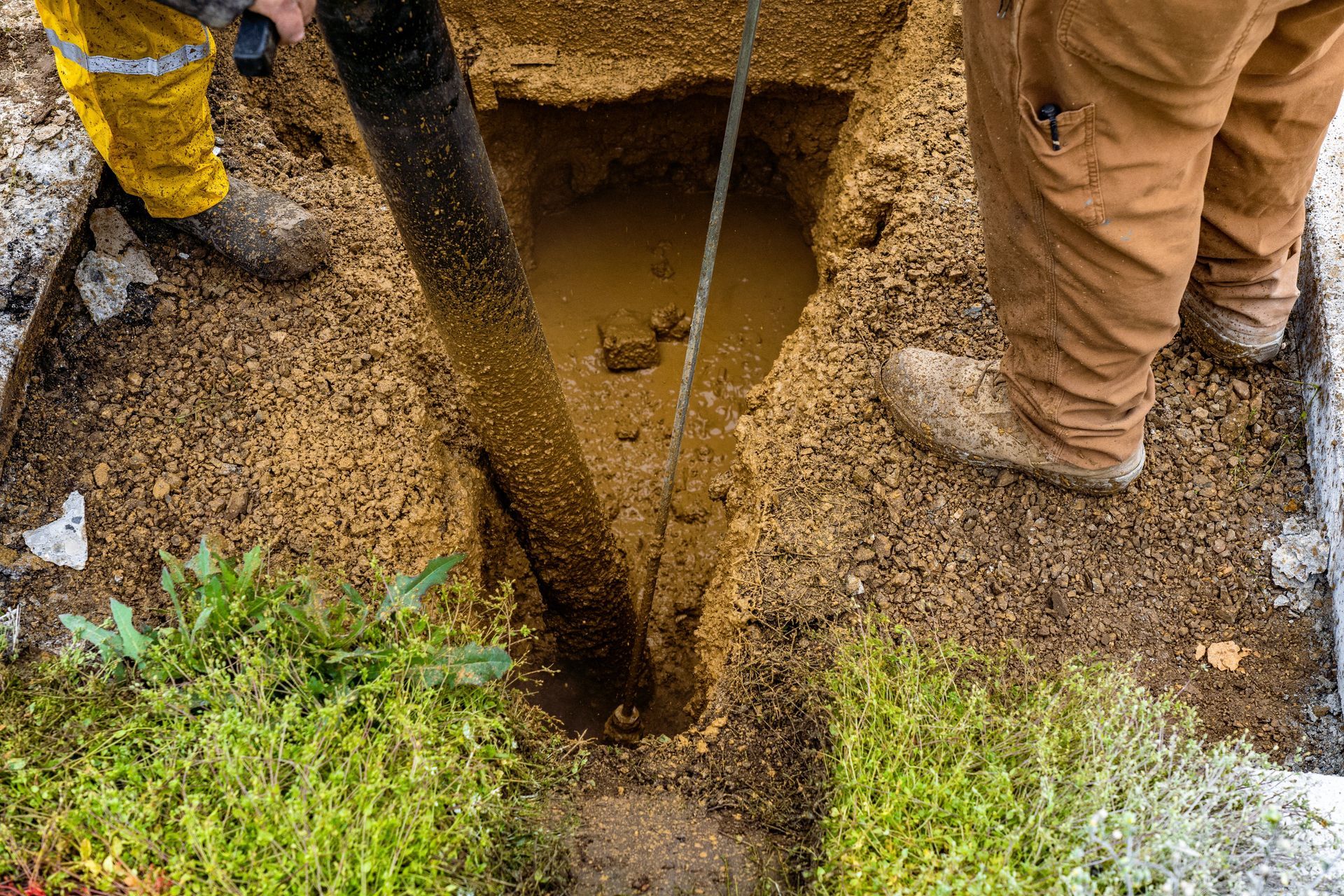
- Trenching for services — water, sewer, stormwater, electrical and communications conduits
- Excavating for any retaining walls, basement areas or below-ground structures included in the design
The depth and configuration of foundation trenches is determined by the soil classification, bearing capacity and structural engineer's requirements. On the Central Coast, where soil types vary considerably — from sandy coastal soils to clay-based profiles and areas with fill or disturbed ground — the structural engineer's footing design takes local conditions into account.
Equipment Involved in Clearing and Excavation
The equipment used on a clearing and excavation project is matched to the scope of the work.
A residential block clearing and site cut typically involves a combination of:
- Skid steer loaders or compact track loaders for vegetation clearing and surface grubbing
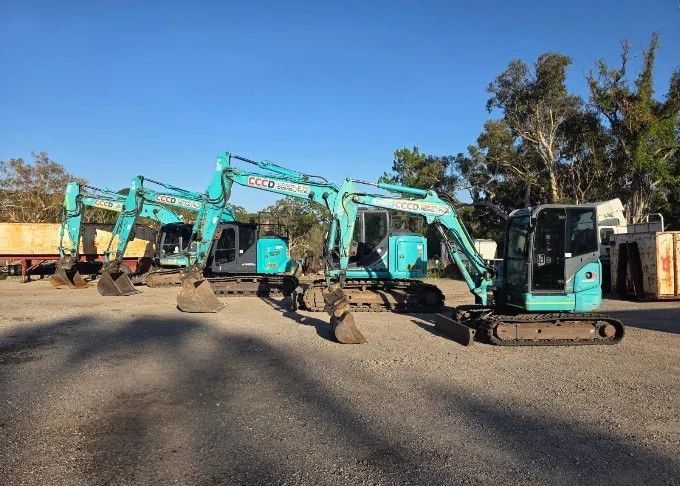
- Excavators in the 8 to 20 tonne range for site cut, trenching and foundation excavation
- Tip trucks for soil and spoil removal from site
- Compactors for fill and sub-base preparation
- Graders on larger sites where precise level control across a wider area is required
Larger excavators are used where significant rock or compacted material is encountered, or on commercial sites where earthwork volumes demand higher productivity. The right equipment selection reduces time on site and produces cleaner, more accurate results.
Local Permits and Ground Conditions on the Central Coast
Site preparation before demolition and excavation on the Central Coast involves navigating a permit environment that varies across council areas.
The Central Coast Council area covers a wide geographic range, and vegetation removal, earthworks and construction activity may trigger requirements under the Local Environmental Plan (LEP), development consent conditions or specific biodiversity provisions.
Common permit considerations for clearing and excavation projects include:
- Tree removal permits, particularly for trees above a specified height or trunk diameter
- Erosion and sediment control requirements, which are mandatory for earthworks sites above a minimum threshold
- Development consent conditions specifying how and when earthworks can be undertaken
- Neighbours and boundary setback requirements affecting the placement and depth of excavation near adjoining properties
Ground conditions across the Central Coast also vary significantly. Coastal fringe areas may encounter sandy or loose profiles requiring careful management of excavation batters and trench stability. Inland areas often present clay or shale profiles with higher bearing capacity but greater excavation effort. Some blocks carry fill from previous construction or land-forming activity, which requires assessment before foundation design is finalised.
Taking the Next Step
We at Central Coast Complete Demolition manage the full process from land clearing through to a build-ready site, with the equipment, licensing and local knowledge to handle each stage under one contractor. Whether your block needs vegetation cleared, trees removed, stumps grubbed and a site cut completed — or a combination of all of these — our team can assess the scope and work through it systematically.
For excavation Central Coast property owners and builders can rely on from clearing through to foundation preparation, get in touch with our team to discuss your project and arrange a quote.