How Much Does Excavation Cost on the Central Coast? What Actually Drives Your Quote
Before a slab, extension, pool or driveway can take shape, excavation is often one of the first major costs to plan for. There’s no single reliable price for excavation on the Central Coast, because the quote depends on site access, ground conditions, the machinery required and what happens to the dug material once it’s out of the ground.
Why There Is No Single Excavation Price
An excavation quote reflects the work needed to complete your particular site safely and to the required levels. Two jobs with similar hole dimensions can take different amounts of time if one has clear access and manageable soil while the other is steep, confined or difficult to reach with machinery.
That is why an excavation cost per cubic metre can be a poor comparison on its own. A per-metre figure may not show whether the quote includes machine transport, an operator, attachments, loading, cartage, disposal or finishing the site. Ask what each price covers before deciding that one quote is cheaper.
For excavations on the Central Coast, we at Central Coast Complete Demolition assess the job requirements and site conditions. Its excavation services include site preparation, trenching, foundation and pool excavation, bulk excavation and earthmoving.
What Drives the Quote
Access, ground conditions, machine choice and material removal can all affect the time and equipment a project needs. A tight infill block in Terrigal or Woy Woy may limit where a machine can travel or turn. An open block around Wyong may offer more room to work, but the ground and the amount of material still need to be assessed.
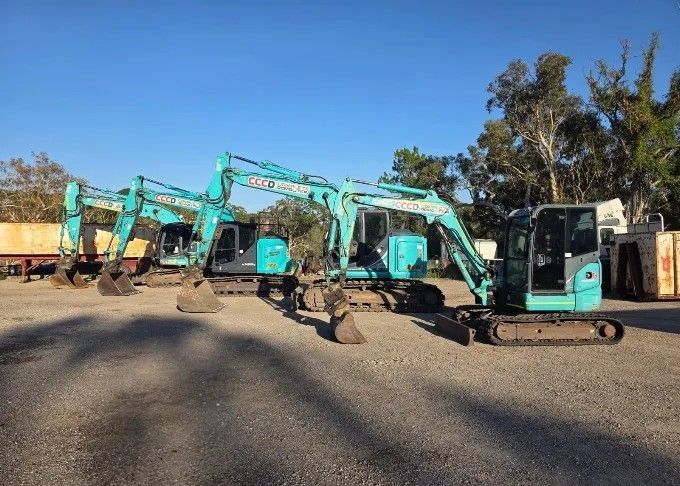
Machine size also matters. A compact excavator may suit a narrow side access or work near existing structures, while a larger machine may be more efficient for bulk earthmoving where there is room to manoeuvre. The right choice depends on the site and the required finish, rather than on machine size alone.
The scope should also be clear. A site cut for a slab, a pool excavation and a driveway preparation job involve different shapes, depths and finishing requirements. Tell the contractor what you’re building, what levels or plans are available, and whether soil is to be retained, reused or removed.
Why Spoil Removal Changes the Cost
Dug soil usually occupies more room once it has been broken up than it did in the ground. This change, often called bulking, can mean more truck space and more cartage than a quick estimate based only on the size of the hole suggests.
Carting and disposal can make up a substantial part of the total job cost. The amount depends on the material, how much can be reused on site, transport requirements and where the remaining material can be taken. If soil needs assessment or special handling, that can affect the plan too. For sites where contamination is a concern, discuss contaminated soil with an appropriately qualified contractor before work begins.
When comparing quotes, check whether loading, truck movements, disposal and any assumptions about reusing soil are included. A price for digging alone may not represent the cost of leaving the site ready for the next stage.
How Ground Conditions Affect Cost
Ground conditions affect how quickly excavation can proceed and what equipment or attachments are needed. Soil that can be removed with a standard bucket may allow a different approach from hard material that requires specialist equipment and more time.
Sandstone occurs across parts of the Central Coast, but conditions can vary between properties and even within a site. If excavation encounters rock, the contractor may need to use a rock breaker or another method suited to the material. That can increase machine time and may also affect how spoil is handled.
This is one reason a desktop volume calculation cannot confirm the final cost by itself. Plans, a site inspection and any available geotechnical information can help identify likely challenges, but the actual ground can still differ from expectations.
Hourly, Fixed Quote or Dry Hire?
The pricing format changes what you’re responsible for and how easy it is to budget. An hourly machine-and-operator rate can suit work where the scope or ground conditions are uncertain, although the final total depends on the time required. Ask how machine transport, attachments, waiting time and spoil removal are charged.
A fixed quote may be easier to budget against when the work can be clearly defined in advance. Check the stated scope, what is excluded and how variations are handled if the site differs from what was expected.
Dry hire means hiring the machine without an operator. It may suit experienced operators doing straightforward work, but the hirer needs to account for delivery, fuel, attachments, time on site, safe operation and managing excavated material. Our guide,
Excavator Hire Vs. Full-Service Excavation on the Central Coast Contractors, explains what to consider when comparing those options.
How to Calculate Your Excavation Budget
You can make an early budget more useful by separating the excavation scope from the other costs that may be part of completing the work. Start with the dimensions and levels shown on your plans, then consider:
- the volume and type of material to be removed
- site access and the likely machine size or attachments
- estimated machine and operator time
- loading, cartage and disposal of spoil
- any rock, water or other conditions that could change the method
- whether levelling, backfilling or other finishing work is included
This is a planning checklist, not a substitute for a site-specific quote. A cubic-metre estimate describes the material in the ground; it does not automatically show how much loose spoil will need transporting or what disposal arrangements apply.
Before requesting quotes, gather your plans, site address, access details and any reports you have. Photos can help explain gates, driveways, slopes and nearby structures, but the contractor may still need to inspect the property before confirming the scope.
Compare Quotes on Scope
A useful comparison looks at the completed work, not just the hourly rate or cost of excavation per cubic metre. Check whether the contractors are pricing the same excavation dimensions, depth, finish and assumptions about the ground.
Ask each contractor to clarify what is included for machine transport, operator time, attachments, spoil loading, cartage, disposal and site clean-up. Find out how unexpected rock or other changes would be priced, and whether any work depends on approvals, service locations or additional reports.
When the scope is written clearly, it is easier to understand why quotes differ and to allow for the work that follows excavation. If you’re comparing a machine hire rate with a contractor’s quote, make sure you’re comparing the same responsibilities and end result.
Plan Your Excavation Budget
The hole itself is only one part of the job. Access, ground conditions, machinery, time and the extra volume of loose spoil can all affect what you’ll pay, so a reliable estimate starts with the actual site and a clearly defined scope.
For a site-specific assessment,
request a free quote from our team at Central Coast Complete Demolition. Share your plans and access details so the team can discuss the work involved and the factors that may affect your quote.
Frequently Asked Questions
Can excavation be priced per cubic metre?
It can be one way to describe or compare part of the work, but it does not show every cost by itself. Confirm whether the rate includes machinery, labour, attachments, spoil removal and disposal.
Does an excavation quote include removing the soil?
Not always. Some quotes cover digging only, while others include loading, cartage and disposal. Ask what happens to the spoil and whether any material is expected to remain on site.
Can I estimate excavation volume from my plans?
Plans can help you estimate the dimensions of a proposed cut, but they may not show all site conditions or how much space the excavated material will occupy once loosened. A contractor can advise what further information is needed for a quote.
Will hitting rock change the price?
It can. Rock may require different equipment or attachments and additional time. Ask how unexpected rock is handled in the quote and how any change to the agreed scope would be priced.
What should I have ready before requesting a quote?
Have your site address, plans or dimensions, project type and details about access ready if available. Mention any known ground reports, services or concerns about contaminated soil so the contractor can consider them when discussing the work.